Legal and Illegal Wildlife Trade
A deep dive into the international trade of the Burmese Python and its regulation under CITES
GY470/CJ490 is a unique interdisciplinary class that combines various fields of natural sciences, political science, and criminology to better understand the intricacies involved in global wildlife trafficking. As a final project for the class, each assigned group is to construct a website about a plant or animal of their choosing that is regulated under CITES. In our group there are three criminal justice majors: Athenna, Karl, and Raegan. There are also two geography majors: Wes and Josiah, and Erin is an environmental science major. Each group member provides a different background and insight and offers a unique perspective on the issue. Wildlife trade is a controversial subject globally. It is difficult to define and differentiate between illegal and legal wildlife trade on a global scale due to different customs, cultures, morals, and laws in different countries.
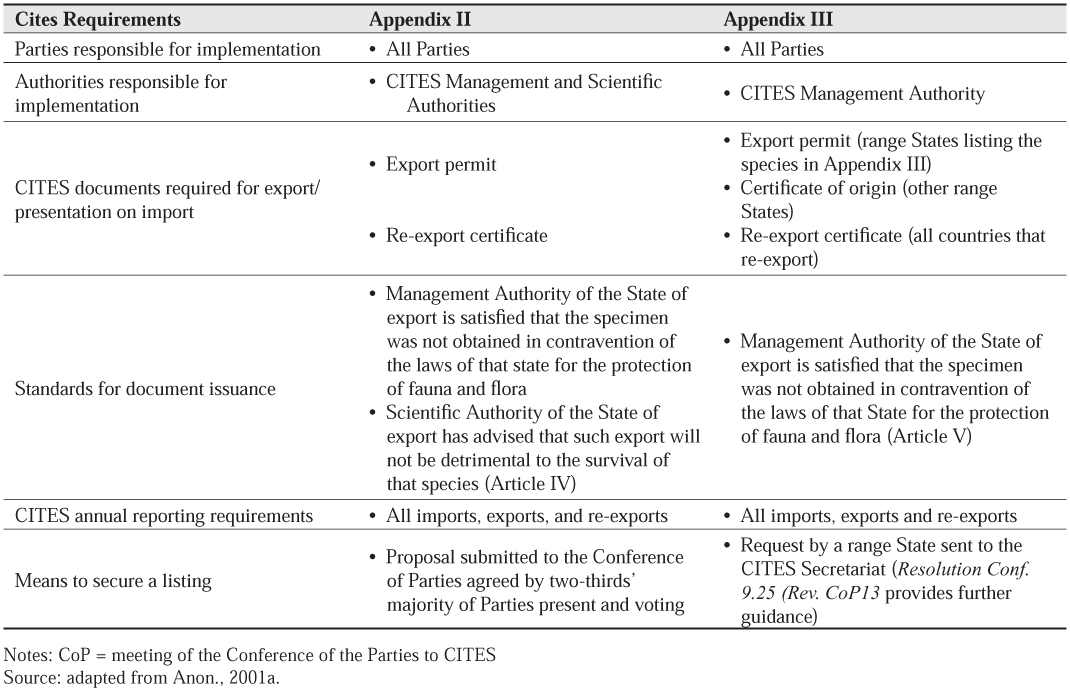
International trade of wildlife is regulated under The Convention on International Trade in Endangered Species of Wild Fauna and Flora (CITES). CITES was enacted in 1973 by 184 independent parties to protect endangered wildlife from extinction caused by global trade. There are more than 40,900 species protected by CITES, including the Burmese Python. The Burmese Python is unique in the way that it is listed as an appendix I and appendix II species on CITES and its impact regionally as an invasive species. This website explores the intricacies of its trade nationally, as well as within the U.S., and the consequences as a result of such trade.
This website is designed to inform people about legal, illegal, and questionably legal Burmese python trade. We want the public to be more aware of the plight of the Burmese python in its native environment, the threats to its survival particularly from the wildlife trade, and action they can take to address this. We also want to inform people about the harms and benefits of the python trade, as well as its legality, in various parts of the world. We know that there is a debate around what is best for almost every wildlife trade and this is no different. Furthermore, we want to raise awareness of the damage done on ecosystems in Florida and elsewhere because of irresponsible handling of the wildlife trade, so that Burmese pythons will not be released into biomes as invasive species.